

Getting Healthcare Costs Right in Texas
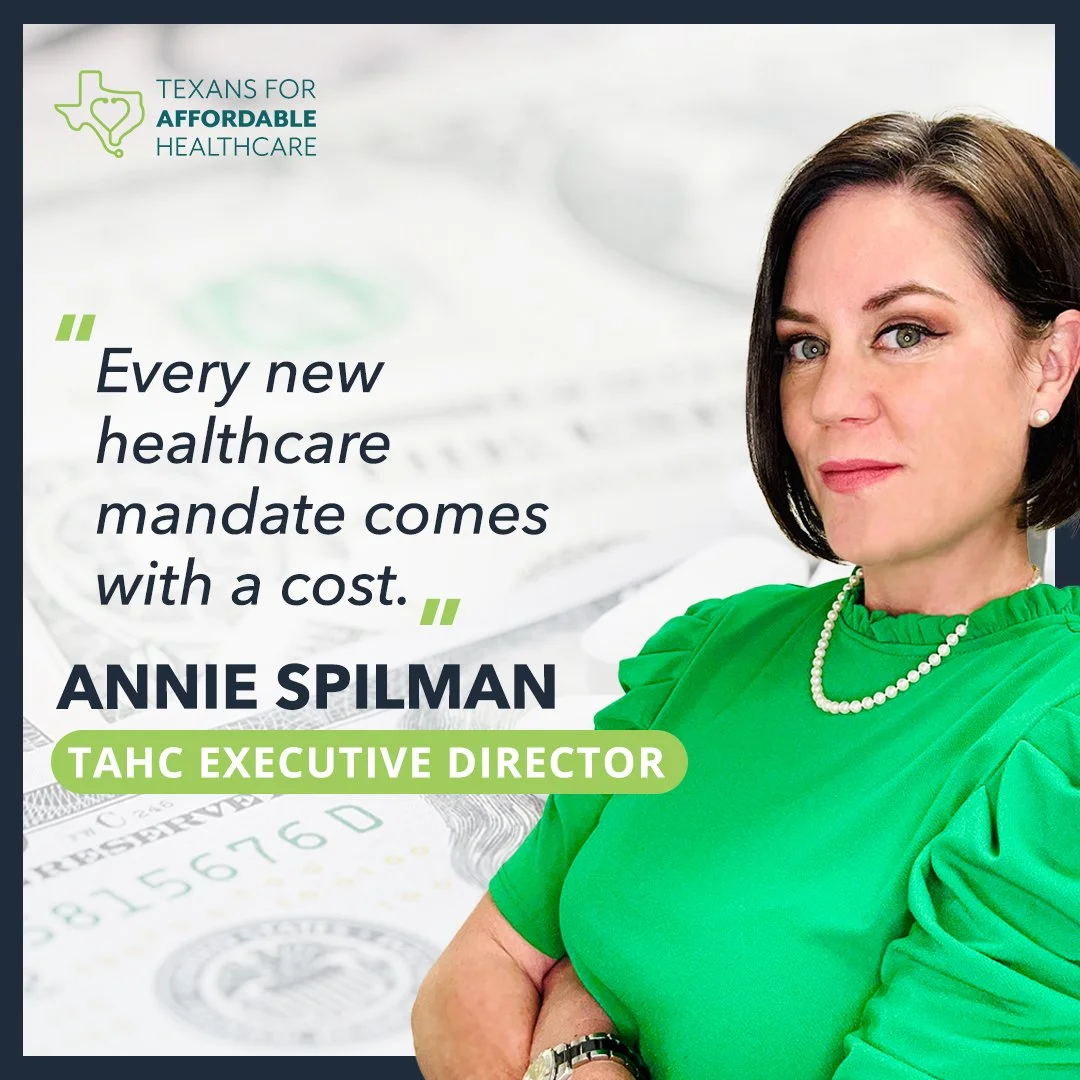
By Texans for Affordable Healthcare Executive Director Annie Spilman
Texas families don’t need convincing that healthcare costs are out of control. What they need, and what lawmakers now have during this interim session, is a real opportunity to do something about it.
That opportunity is already taking shape. Both the state House and Senate have launched interim efforts focused on healthcare affordability, representing one of the most focused examinations of healthcare costs the state has undertaken in years.
Why does this matter? The interim is when committees gather testimony, evaluate policy options, and shape the proposals that will ultimately be debated when the Legislature reconvenes. This is where the groundwork for meaningful reform is laid.
In the House, Speaker Dustin Burrows has created the Select Committee on Health Care Affordability, which started with a meeting and hearing testimony April 30 and May 1. The Senate Health and Human Services Committee is underway, examining similar issues under the direction of the lieutenant governor.
The interim session seeks to build on recent legislative successes. For instance, in 2025, lawmakers passed a new rule requiring a clear estimate of how much proposed healthcare mandates would cost before they are considered. That kind of transparency helps ensure better decisions.
But more work remains.
Across the state, from the Panhandle to the Gulf Coast, families are feeling strapped for cash, in large part due to healthcare expenses. Costs are rising faster than wages, forcing difficult decisions about when and whether to seek care.
The data backs it up. Texas ranks 48th in its overall healthcare system and 50th in cost burden, earning a D+ grade in a recent West Health-Gallup poll. In a local survey conducted by Texas pollster Baselice & Associates, 37% of Texans say they have delayed or avoided care due to unclear pricing, and 40% report skipping or rationing medications because of cost.
These statistics reflect everyday burdens: families delaying treatment, small business owners weighing coverage options, and patients rationing medications.
During these interim sessions, lawmakers have an opportunity to focus on identifying and reducing cost drivers in the system, rather than targeting industry scapegoats or introducing costly mandates that sometimes exacerbate the problem.
For instance, Texas now ranks third in the nation for expensive, unfunded government healthcare mandates, ahead of California. These mandates are often well-intentioned, but they are not cost-free. Their impact shows up in higher premiums, higher deductibles, and more expensive prescription drugs for Texans. Lawmakers must find a way to reign in these mandates.
Another major cost driver that needs more attention is hospital facility fees—often unexpected—which can add hundreds or even thousands of dollars to a bill. Patients are increasingly frustrated when these charges appear for routine services, telehealth visits, or preventive care that never involved a hospital setting. Moreover, research shows that hospitals and physicians often apply markups of more than 40% to prescription drugs when compared to specialty pharmacy prices. As a result, insurance premiums have continued to climb, and Texas leads the nation in total prescription drug spending, accounting for more than 11% of all U.S. prescription drug costs
These are just a few of the factors that create a healthcare cost crisis for Texas families.
The healthcare system is complex, but for Texas families, the goals are simple: lower costs, clearer pricing, fewer surprises, and more flexibility in coverage.
Reducing healthcare costs requires discipline, transparency, and a willingness to confront every cost driver in the system.
The interim provides a window to do this work thoughtfully. The opportunity is here. Now it’s up to lawmakers to make it count.