

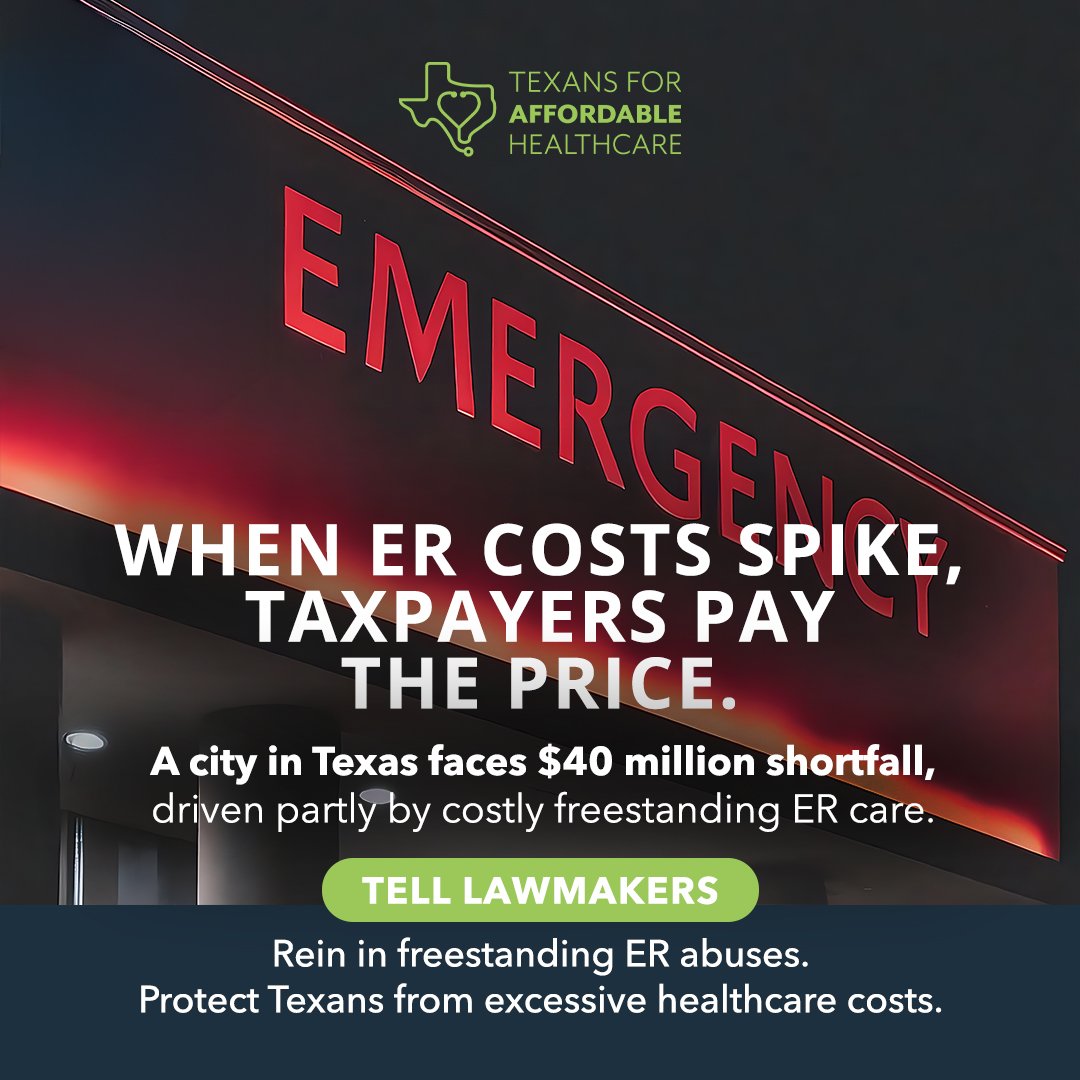
Texas lawmakers must protect patients by reining in excessive freestanding emergency rooms (ERs) costs.
Freestanding ERs are physically separate from a main hospital campus. They.can look a lot like neighborhood urgent care clinics. But the bills they generate can be dramatically different. For example:
A patient in San Antonio who went to a neighborhood freestanding facility for a tetanus shot received a bill for more than $1,800.
Another freestanding Houston-based ER charged patients between $2,000 and $5,000 for Covid-19 tests.
Cases in San Antonio are particularly alarming and out of control.
The city is approximately $40 million over budget on employee healthcare costs this year, and city officials say costly out-of-network freestanding ER care is one of the major contributors.
According to the San Antonio Express-News, one freestanding ER operator accounted for 53% of all emergency room claims among city employees and their dependents in 2025.
Strikingly, the city's average cost per visit to those facilities reportedly jumped from $886 to $1,846, more than doubling.
Those costs aren't all absorbed by an insurance company because it's a cost deriving from city employee care. Therefore, costs are passed along to taxpayers who are already being squeezed by increasing property taxes and more.
The only fix is a legislative one and there is an opportunity in the coming year to make the change.
Texas families are already struggling with healthcare costs. They shouldn't also have to subsidize a business model that can turn relatively routine care into an extraordinarily expensive claim.